Nothing in a garden says “Look at me” more forcefully than carefully placed accents. Whether
plant or solid object, each one helps create a scene and commands attention.
Seems like I mention this a lot, but it is one of the most striking additions to any garden. I see
one-off plants and garden art from high-end botanic and historic gardens to flower shows where
designers vie for attention, and in simpler, often home-made displays in neighbors’ gardens.
Not going to get into the difference between expensive artwork and home-made “yard art”
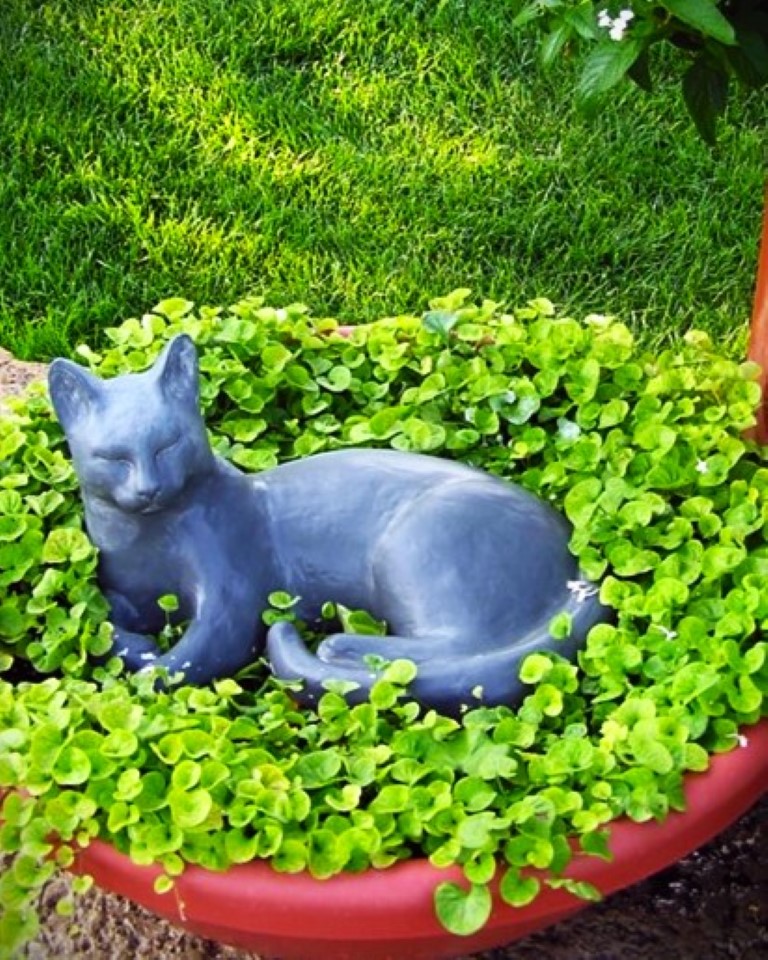 Felder Rushing shares his many sculptures and statues that are on display in his garden.
because there are too many personalities and garden styles involved, with unlimited choices in
subject, scale (how each “fits” in a garden, looks right in its space), and material. One person’s
pair of life-size marble lions is another person’s gnome in a flowerpot, and I daresay an eight-
foot naked goddess statue like the ones in Versailles would be less suitable in my little Jackson
cottage garden than my locally welded metal scarecrow.
And who is to say that the large, eye-catching garden sculpture created specifically for my
garden by Jackson glass artist Andrew Young is tastier than my trio of bottle trees made from
cedar branches and wine bottles? They’re both glass suspended outside where their colors sing in
the sunlight. As Scottish garden artist Ian Finlay put it, “Better truth to intellect, than truth to
materials.”
The point is to create a strong focal point, to draw in and connect viewers with the garden and its
ideas. It can be done just with plants, of course, like contrasting or breaking up a solid hedge or
fence with a topiary or bare-stemmed crape myrtle, or a group of ferny nandinas set off by a
spikey-leaf yucca.
Like unique plants, decorative art can draw attention to a specific area, leading the eye from
point to point, and providing a bridge through all seasons and difficult times like winter when
flowers are mostly missing or when you have to cut down cannas because or leaf roller
caterpillars. That’s when you need something visual to keep interest going until things grow back
Accessories like gates, seating, paving material, and arbors also create mood or add character,
and can imbue a scene with style be it classical, whimsical, contemporary, naturalistic, or
something reminiscent of another land or culture (think English cottage or Japanese serenity).
To that, most folks add purely ornamental accessories such as statuary, sculptures, urns, pottery,
birdbaths, animal figures, wall or other hanging objects, folk art, and much more. Bottle trees,
scarecrows, and painted bird houses, and objets trouvé or “found objects” fit in there somewhere
as well.
And it doesn’t have anything to do with price. As LSU landscape architecture professor Neal
Odenwald often taught, “You can get a million dollars’ embellishment with a single well-placed
urn.”
In my quirky little cottage garden, I carefully place strong accents like statue, outsider-art
sculptures, metal creatures, vine teepees, bottle trees, and an old copper still. But scattered
throughout smaller but evocative vignettes, including group pots of flowers and herbs, are
bowling balls, tire planters, antique gnomes, ceramic flowers, clustered garden tools, stacked
stones, and my grandmother’s cherished concrete chicken. Even night lighting fixtures can be
artistic.
Granted, over accessorizing, whether mismatched knick-knacks cluttering the living room
mantle, coffee table, and kitchen windowsill, or unusual objects in the yard, is not everyone’s cup
of tea. But rather than merely a collection of plants, every garden needs at least one accent, if
only having a patriotic or college flag by the front door.
What does your garden say about itself when you aren’t there?
Felder Rushing is a Mississippi author, columnist, and host of the “Gestalt Gardener” on MPB Think
Radio. Email gardening questions to rushingfelder@yahoo.com.