Editor’s note: This story is told through the point of view of C-P Sports Editor Jackson Howell, walking us through what a typical Tuesday looks like at the office.
At 6:30 a.m., my fourth or fifth alarm finally prompts me to open my eyes for good. Done snoozing, I groggily get out of bed, tired from a day full of writing on the Monday before, preparing to get ready for work. If I’m lucky or feel motivated, I’ll brew a cup of coffee before heading out the door to get to work by 8 a.m.
As I’m driving down U.S. 98, I start to map out the day’s events in my head. Hopefully I’ve already knocked out passing out Player of the Week certificates and completed my In the Halls interviews at the local schools, but sometimes procrastination gets the better of me. I either knock those tasks out first before heading to the office or I arrive at my desk, ready to tackle the long day ahead.
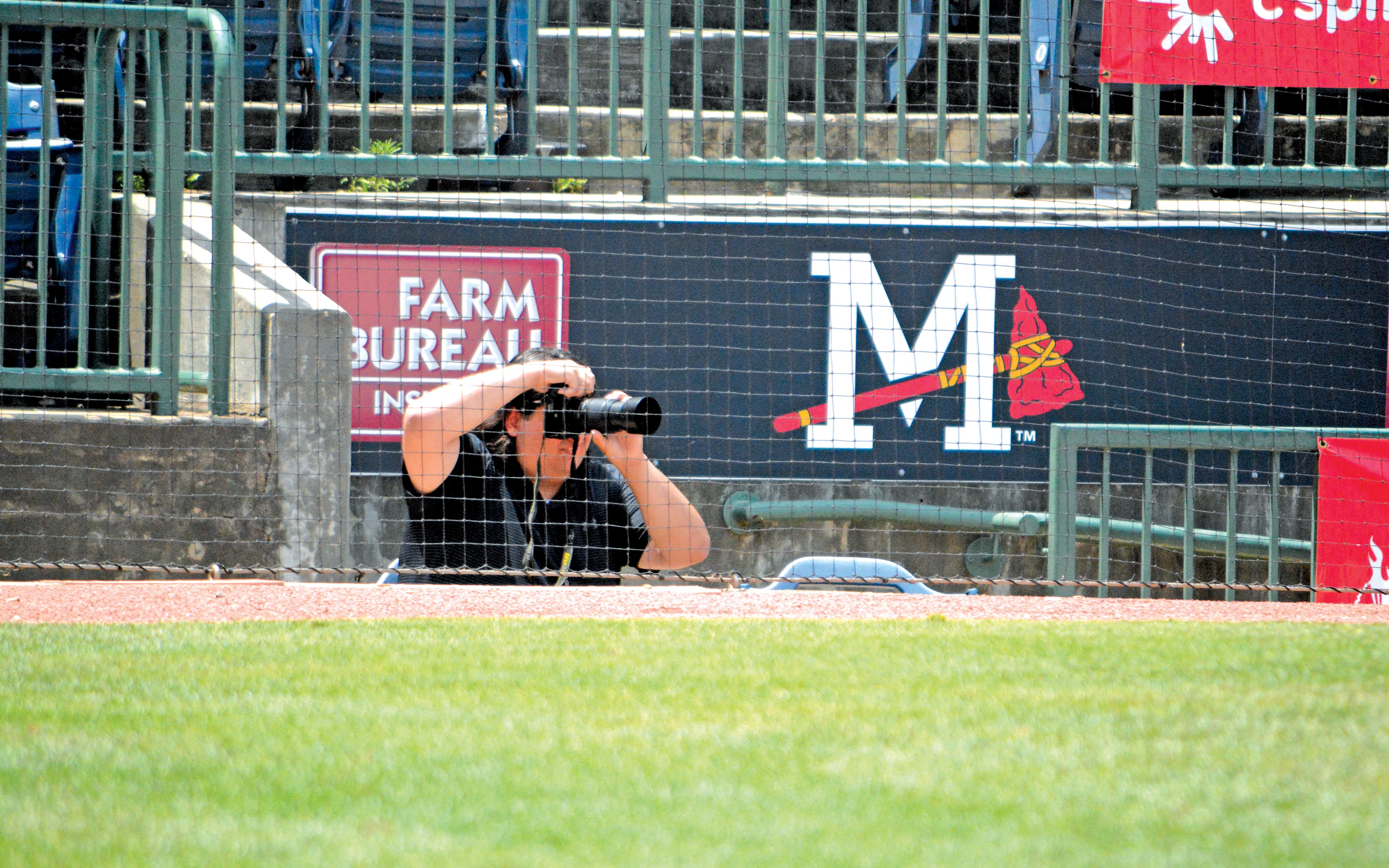 Sports Editor Jackson Howell.
Tuesdays are no ordinary day for those of us at the C-P. It’s the one day a week where everyone has the same goal in mind, working as some form of a machine to accomplish one goal: Make sure a paper is prepared and sent out to print by evening’s end.
When I arrive at the office on Tuesdays, typically Graphic Designer Avery Lockwood, who hasn’t been late a day in her life, and Publisher Joshua Campbell have already started their day of work. Media Advisor Pam Ball and Office Manager Tracey McNeese aren’t far behind.
While I’m preparing notes and stories to later conduct interviews with head coaches around Marion County, the dynamic duo of Lockwood and Campbell are also well into the planning stages. Lockwood rummages through all the files on our office’s shared hard drive, looking to create space for all of the week’s content to go in – including submitted content, editorials, obituaries, classifieds, front-and-jump news stories and sports pages. The space for content she makes is fitted around the week’s ads, which she and Ball work together to finalize Friday or as late as Monday.
“We have pages that have to go in every week like classifieds, the church page, kid’s page, obituaries, that sort of stuff,” Lockwood said. “I make sure that I have all of those things ready.”
Campbell, the boss who wears many hats, including handling the C-P’s administrative tasks, helping with advertising and serving as the news writer, runs down the list of the day’s story ideas. He said many news events in the community take place over the weekend, meaning the groundwork is already there come Tuesday. But when content is sometimes harder to find, he has to use tried and true methods that he’s somewhat perfected over the years to come through.
“You have to know certain avenues of where you can always get news. I don’t always like writing about crime, but there’s always crime,” Campbell said. “The biggest thing is people contacting us about events or things that are going on, or we reach out to local officials to see what projects are coming up or go to a board meeting. We kind of keep an eye out for any human interest things that are going on in Marion County.”
Campbell added that he often relies on those in the community to let us know when events are upcoming, as many things can fall through the cracks due to the staff not being able to have eyes everywhere.
“People tend to think that we’re omnipresent, that we know everything and we’re everywhere. In reality, it’s me and my sports editor. That’s what we’ve got. We try to cover everything that we absolutely can, but at the end of the day, we’re only two people,” he said. “We have limits to our hours just like any other job. We can only cover so much.
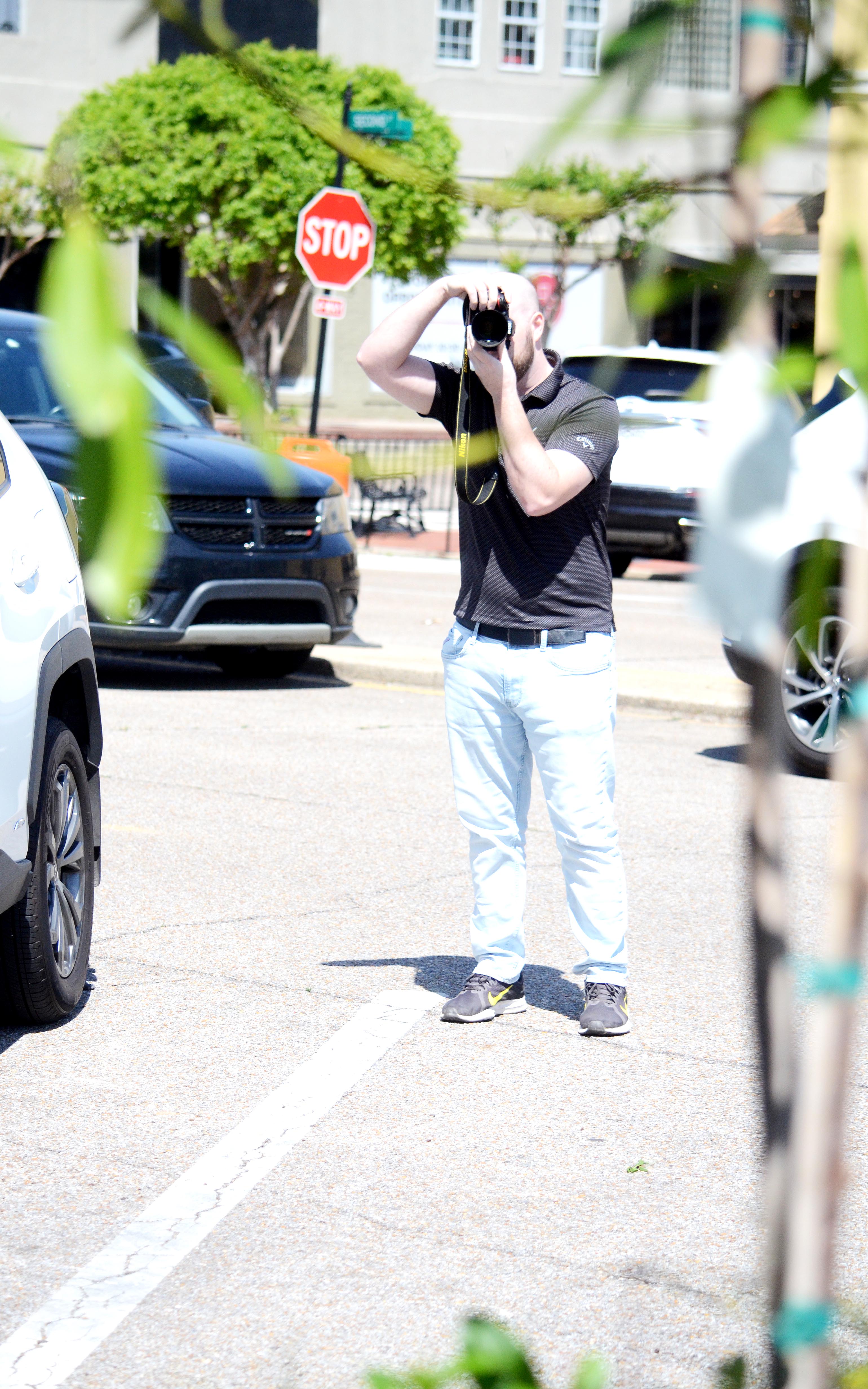 Publisher Joshua Campbell
“We try our best to get all the information that we can and rely on people to tell us that information.”
Once the morning’s prep work is done, often completed in the past with a staff meeting involving Campbell, Lockwood and me, it’s time to hit the ground running.
By the time 11 a.m. hits, I’m typically ready to go on the interview front. I’ve contacted all the coaches to be interviewed for that week’s stories, and I continue writing, getting pictures together or compiling stats until a coach gets back with me, saying they’re ready for an interview. I make the call on my office phone while recording the interview on my personal phone, which may seem convoluted but I find it easiest to get all the information together. After all, they’re expecting a call from me, and the work phone is a local area code at worst.
Campbell is conducting his interviews or is out on the town taking pictures, while Lockwood is still plugging and placing. She often has the inside pages completed by early afternoon.
Not everyone in the office is grinding away at their computers on Tuesdays, though. Ball is sometimes in the office communicating with clients over the phone or through email, but she’s often on the road going door to door on her sales runs. McNeese, who is only required to work until 12:30 p.m. due to her part-time schedule, holds the fort down for any customers that call or come in – usually past 1 p.m.
She’s able to do this, she said, because Mondays are her intense work days, making sure to finalize the classified and obituary sections so that Campbell isn’t bogged down with proofing those pages Tuesday morning.
“You can tell everybody is more busy and trying to get everything completed because the paper is sent out that night to be printed. So everybody’s just trying to concentrate more to get their stuff done,” McNeese explained. “People don’t realize the work that goes on, how hard everybody works in here to make sure that the paper gets out on time. It’s not that we are out to get people. The reporters, the sales rep and the graphic designer – it’s stressful for them. I just hold down the fort while they are working.”
While Ball views Wednesday as her hardest day of the week due to having to deliver newspapers to all the businesses she works with, the rest of her days are busy in their own right, including Tuesdays.
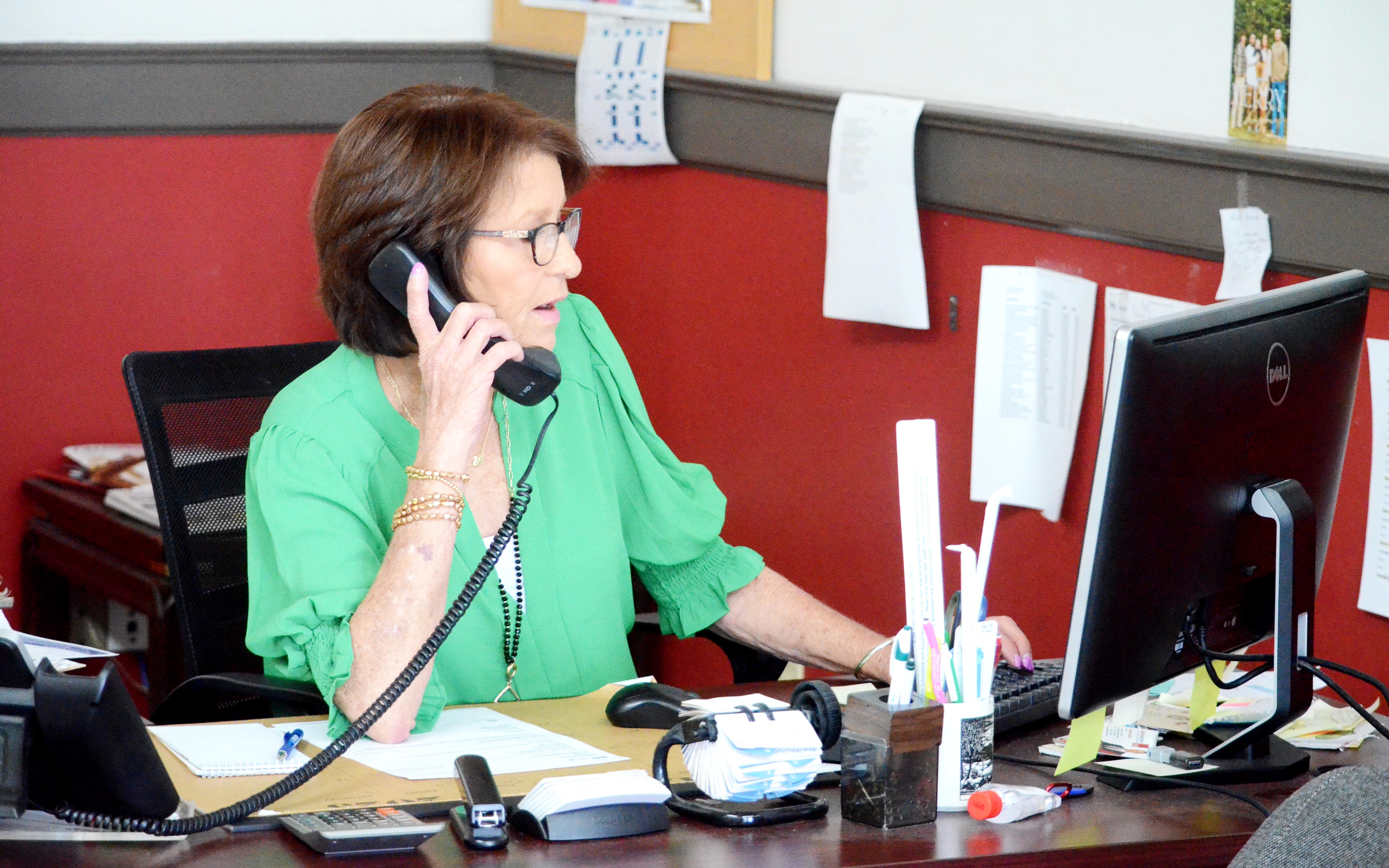 Media Advisor Pam Ball.
She said the best way to interact with a client is in person, so she’ll travel to a business, introduce herself if they haven’t already met and ask what she can do to help the business owner showcase their goods or services.
“I’ll mention, ‘Would you be interested in this special section we have going on now?’ I’ll explain whatever it is and give them examples because a majority of people, myself included before I started working here, have no idea what an eighth-page ad looks like,” Ball explained. “A lot of times, catching them at a good time – walking in when they’re not waiting on a customer. And a customer comes first, so I wait to find out if it’s convenient or if they need me to come back. After that, it’s once we get everything together and I present them a proof of their ad.”
Ball, who has lived in Columbia her entire life, said she always tries to do right by her clients because if a business succeeds, the surrounding area succeeds and the community succeeds.
“When the client tells me they had such a great response, thank me and appreciate the work I do to help promote their business, that’s what I want. I was born, bred and lived in Columbia all my life. I want to do everything I can to help see it grow,” she explained. “The hardest part is when you’ve done your best and, for unknown reasons to me, the business doesn’t succeed. I try to feel like I’ve done the best I can to help them. You just hate to see somebody you’ve worked with not have it work out.”
By the time Tuesday rolls around, the ads that are set to run in the paper should be all but ready to roll. The ad-building process begins with Ball conversing with the clients, and she relays the client’s wants or needs to Lockwood to begin working on the ad.
“You try to make (the ad) look as good as you can, like how the client wants it. Most of the time, the client has an idea in their head, and you’re trying to match that,” Lockwood said. “You have your theme, then you have your content and then you have the logo, address and phone number. Sometimes I can bust it out in like 10 minutes, and sometimes it takes me like an hour because some things aren’t fitting the right way. It’s either the easiest puzzle piece in the world or it’s 10,000 puzzle pieces. To me, graphic design is like a puzzle.”
Lockwood added that she asks that all clients be as specific as possible in what they want in an ad because one of the hardest parts of her job is trying to match her vision with the client’s. When instructions are unclear or incomplete, it can lead to the ad not turning out the way the client intended.
After Campbell and I have finished writing and proofing each other’s stories, usually between 3 and 4 p.m., or just a little later, the layout process begins.
The first things I try to knock in the sports section are the Stat of the Week, Fan of the Week and the Players of the Week, leaving only the stories and art left to be determined. The design program we use, Quark, can be tricky to learn at first, as I found out all too well in the months following my hire in May 2023. Campbell’s been at it for more than eight years, so he’s got everything down to a science pretty much. But there can always be hiccups along the way.
“It’s like putting together a big digital puzzle. You start with how much space you have, how much content you have and the best way to present your content to where it all fits into the allotted space,” he explained. “Once we have all the pages put together, we print them out and proof them. We try to catch any errors – we’re not perfect in that regard. Some things slip through the cracks, but we try to get as many eyeballs on it as possible.”
The layout process for front-and-jumps and sports takes around a couple of hours. We then print our sections in black and white so that we can see how the concepts look on paper while searching for any grammatical mistakes or layout errors. Once all the pages have been revised and examined, with everything seemingly hunkey-dorey, we PDF our files to allow Lockwood to submit our work. The submissions are done through a website, allowing our printers in McComb to access the files and begin printing copies of the newspaper so that we can have them on shelves the next day.
Once Lockwood exclaims, “The paper’s sent,” relief sets in throughout the office.
“I thank God. Also, (I ask) is everything set. I always have to double and triple check when we send the papers to make sure that all the pages are approved. And because we send them to McComb through a website, I’m the person who touches it last,” Lockwood said. “So I make sure it’s approved and go home. Then I go see my dog, Zelda, and we go play fetch.”
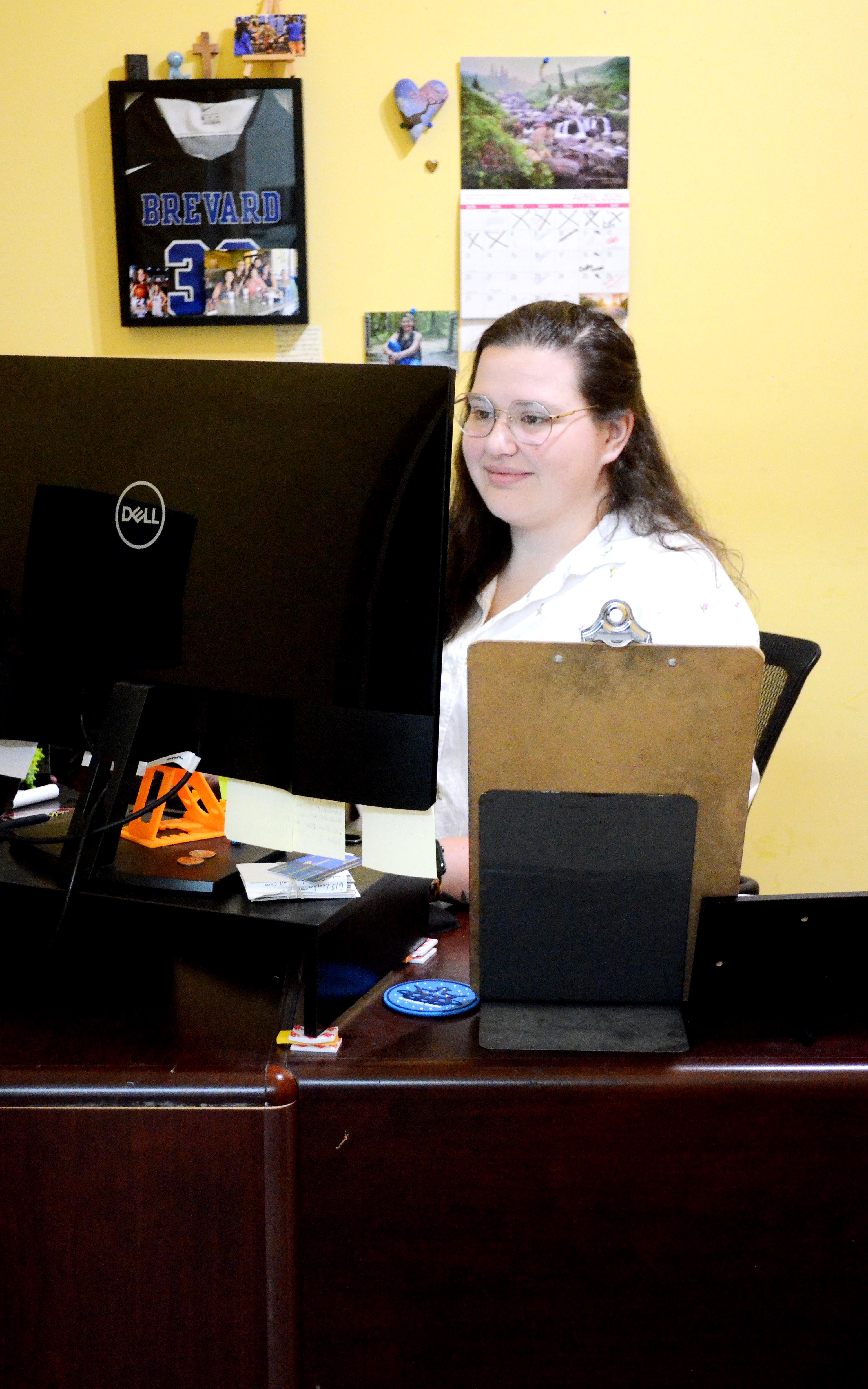 Graphic Designer Avery Lockwood.
“I would say it’s both a little cathartic and draining,” Campbell explained. “I don’t think people realize how mentally and physically taxing writing can be. It takes a lot of focus and concentration. I would say most Wednesday mornings, there’s not a lot left in the battery. Wednesday mornings are probably the hardest part of the week, just after pouring so much energy into the paper on Tuesday and having to turn around Wednesday morning and get back to work. It can be hard, but you’ve got to do what you’ve got to do.”
If I have a Tuesday night game to cover, I’ll grab my camera and take off to either Columbia, Columbia Academy, East Marion, West Marion or, during basketball season, Woodlawn Prep. If not, I’ll just hop in the truck, call my girlfriend and head home. If I’m feeling clever, I’ll play Lynyrd Skynyrd’s “Tuesday’s Gone” on the radio.
At the end of the day, long Tuesdays and long weeks or not, serving the community and putting smiles on faces is what makes the job worth it. Being able to be the messenger of important information or human-interest stories, which Campbell said are some of his favorite stories to write, gives us a sense of pride.
“Being a part of the media can be very rewarding, especially when you’re telling human interest stories, getting to know the people behind them and whatever they’ve done, a lot of times they’ve done something incredible, witnessed something incredible or been a part of something incredible. Being able to tell that story and inform others about it while getting to know the people behind it can be incredibly rewarding,” Campbell said. “And you get to meet a lot of people doing this job – a lot of people that you wouldn’t know from Adam otherwise.
“I would say when I first came to Columbia eight years ago as the Sports Editor, I never expected to stay as long as I did. I never expected to do anything other than sports. I never expected to one day be the Publisher. But there really is a difference about the people in Marion County. They care. They care about each other, and they care about the community. Having grown up on military bases, moving every two years until my dad retired from the Navy and we finally settled down, that wasn’t something I really got to experience growing up – having that sense of community. It can be really special to see that bond that people have with this community.”
No lies were spoken by Campbell. This community, passionate about its own people and will defend them against anything, is why we do what we do. Newspapers, the journalism business as a whole, is supposed to inform the public. That’s all there is to it, and we’re happy to continue doing so on a weekly basis.
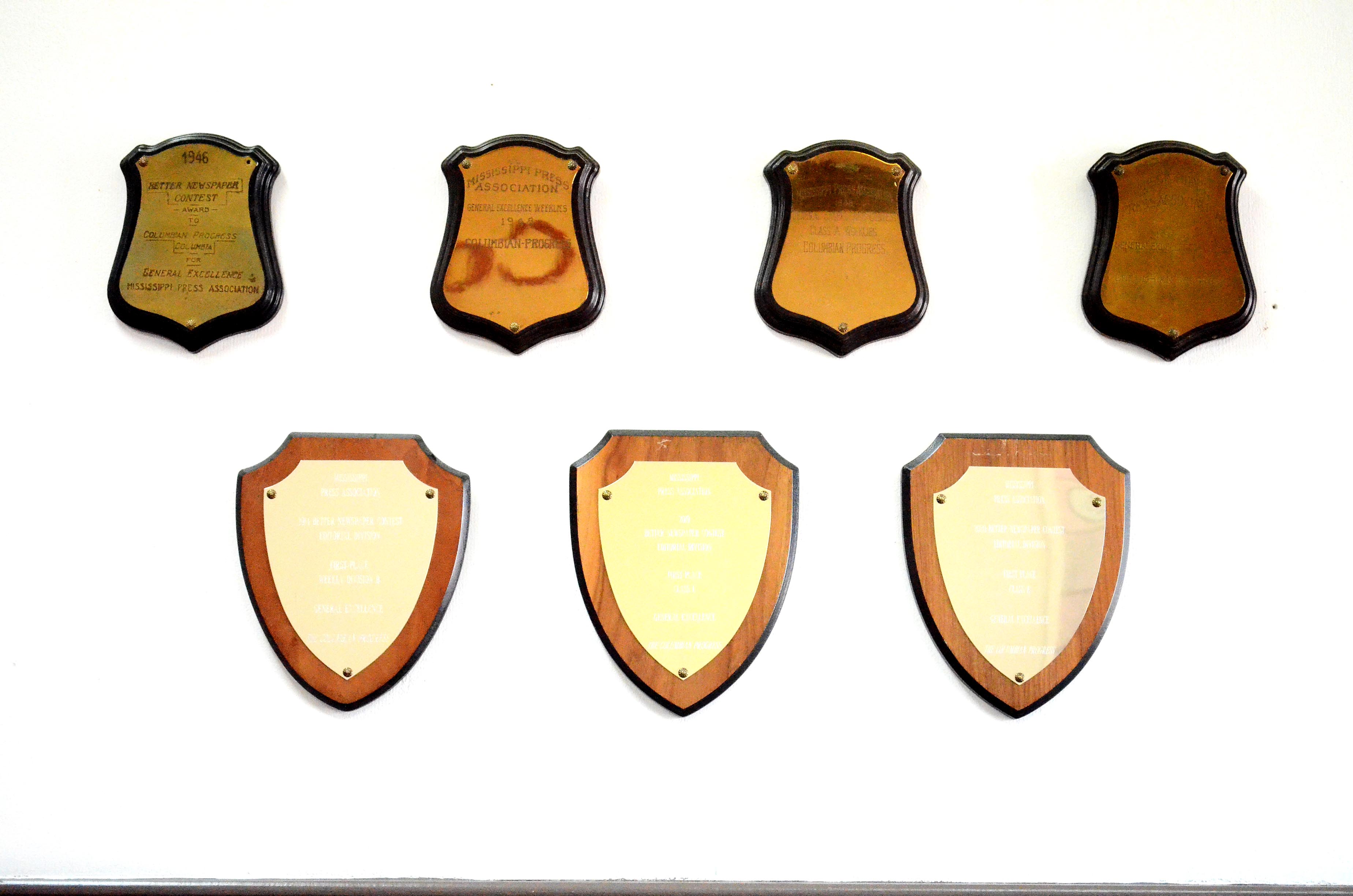 The Columbian-Progress has won many awards in editorial, advertising, and general excellence.